Showing posts with label Back Woods. Show all posts

Friday, December 17, 2010

A Fond Farewell

It is with a degree of sadness that I bid farewell to the Back Woods and MOSI. I am moving on to a new position collecting data on the greater urban forest of Tampa Bay and it’s surrounding watersheds with the University of Florida.

It has been my great pleasure to have had an opportunity to work with the wonderful staff at MOSI and all of the outstanding volunteers that have helped with our restoration activities in the Back Woods.

I will truly miss this little piece of woods…I leave with a multitude of happy memories of quirky finds, battles with invasive species, and the many gopher tortoises all named Fred!

I truly hope you have enjoyed my narration of the Back Woods saga and hope you continue to follow the story as other staff and volunteers take up the torch and carry on with the maintenance, restoration, and telling the story of the Back Woods Forest Preserve at MOSI.

Very Merry Holidays and all my best to you and yours for the New Year!!

Cheers, Carolyn aka The Longleaf

Tuesday, July 27, 2010

Birding in the Back Woods

DSCN1665

I was treated to quite a roundup of songbirds and other feathered forms during this morning’s cruise of the forest. In a tiny patch of canopy, a Red Bellied Woodpecker surveyed all from up on high. Beneath the red naped bird flitted a mix of Carolina Chickadees, Tufted Titmouse, a Yellow Rumped Warbler, a skulking Brown Thrasher, a pair of Northern Cardinals (do they come any other way), and I swear …although I haven’t seen one before…and it is the wrong time of year …a Black and White Warbler as well!

In a recent dinner conversation, I brought up the fact I thought the Back Woods was a decent little birding spot. After detailing all the wonderful sightings I have had in the past couple years, my companions concluded I was selling the place short. That our little patch of woods in the midst of Tampa was actually a very nice little birding spot. I most definitely think they were right!

When you come visit our forest systems, some of the best times to see a diversity of bird species is early in the morning and often in the late afternoon after the break of the heat of the day. Birds can be spotted just about anywhere zooming in and around the wetlands, taking dust baths in the sandhill, and feasting on all manner of insects through out the canopy and shrubs in the flatwoods and hammock. Pause for a moment any point along the trail, listen and watch closely, and you will be surprised how alive the Back Woods is with bird life.

Some of the sightings I have had in just the past two weeks include: Great Horned Owl, Red Shouldered Hawk, Loggerhead Shrike, Black Vulture, Pileated Woodpecker, Red Bellied Woodpecker, Downy Woodpecker, Northern Cardinal, Grey Catbird, Yellow Rumped Warbler, Brown Thrasher, Carolina Chickadee, Tufted Titmouse, Carolina Wrens galore, and maybe even a Black and White Warbler!

Check out the Animal Species tab above for a list with more bird species spotted in the Back Woods and some non feathered inhabitants as well! Then grab your binoculars and head for the woods….the Back Woods at MOSI that is!!

Friday, January 22, 2010

New Trail Surface and More

DSCN0409_stitch

What a wonderfully frosty start to the new year. Much of the Back Woods vegetation is thoroughly dormant right now. The few Semi evergreen and evergreen trees and shrubs stand out starkly against the sleeping skeletons of deciduous trees. The warming weather has brought our gopher tortoises out foraging to make up for lost time in a torpor over the wintery past couple of weeks. We did catch a fine example of some mighty generous and frosty gopher tortoise poo deposited right before the freezes.

DSCN0410

Volunteers George, Shayna, and Catlin helped me finish pulling up the last of the plastic on the main trail in preparation for the new shell bed. Local contractor Scheid’s Tractor Service did an awesome job of laying out the shell and doing a finally grade by hand! Thanks Eddie, it looks great. The new trail really looks fabulous and feels great underfoot. It is definitely crunchy, as a couple of people noted, but that should evolve as the material breaks down under traffic. The new surface is now much safer surface for hikers of all abilities. Take a moment to peak your feet from time to time, there is some other fossiliferous material mixed in with shell. You might just find a sharks tooth or two if you have a keen eye.

DSCN0422

More on the Volunteer front: Great news for the Back Woods! Volunteer Catlin has begun an internship with us in conjunction with finishing an Environmental Science and Policy degree at USF. We are very happy to have her input and help as we complete the last of the requirements of our EPC grant and move on implementing a new grant from the US Fish and Wildlife Service rehabbing the uplands.

The past two weeks have been a doozies  for finding the weird in the Back Woods. A collection of the usual unusual as we continue to pick up and maintain the preserve.

Monday, December 21, 2009

Volunteers Tackle Trail Demo With Teamwork

Wow! We had one fabulous assemblage of volunteers this past Saturday to help pull up the old trail underlayment in preparation for a new shell path. Two of our weekly volunteer staff Catlin and George were joined by Michael, Erin, and Brian, Richard, Jeanne, David, Judy, and myself for some seriously dirty and back challenging work.  The first couple of volunteers to arrive (Jeanne and David) dove into the work right away. The rest of the mornings introductions were done on the fly…”good morning, gloves are over there, hop right in and just follow the lead” :-)!!

DSCN0841DSCN0845 DSCN0842 

The volunteers cleared 2/3 of the trail or just over 900 linear feet of Geoblock 4-5 ft wide. That’s over 4000 sq ft of material lifted from the ground. That was 4ooo sq ft of plastic grid full of gravel, wet sand, anchored to the ground with weed and tree roots! And, all of this was accomplished in just 4 hours. I was truly impressed by the tenacity with which the team tackled the project. And, I am truly grateful for all the help!

Much thanks again to members of the Jose Gaspar Toastmasters of Tampa; Richard, Jeanne, David, and Judy (the Toastmasters public speaking group meets at MOSI and volunteers for the museum and the Back Woods), extra thanks to Jeanne and David for the field ‘power station’ to keep the drills recharged, Catlin and George for putting in an extra day (you guys are the best), Brian (nice to see you again), Erin (Gator Gal extraordinaire), and husband Michael (thanks honey!)…an additional note of thanks goes to ‘Super Amazing Steve’ from our facilities staff for the last minute manufacture of specialty tool for the job; the volunteers send their thanks!

Friday, December 18, 2009

Barred Owls and Boardwalks

DSCN0820 DSCN0837

Construction of the new boardwalk got underway this week just in time for all the stormy weather. Posts from the previous boardwalk had to be removed before construction of the new walk could begin. The crew from Golf Construction seem to be having plenty of fun slogging about in the thick of it to get the job done.

DSCN0801 Rumbling through the Back Woods on the GATOR utility vehicle is not always the best way to catch sight of wildlife. Unless you are satisfied with glimpse of their rear ends dashing away from the awful rattle the gator makes. I startled this beautiful Barred Owl out of a tree as I rumbled under its perch along the trail. Fortunately for me, after swooping right over my head, this owl took a moment to catch a glimpse of me before silently flying off to some other spot in the canopy. What a cutie!! The Barred Owl should be right at home in our little forest, preferring a mature canopy and tolerant of urban areas. The habitat improvements we are making, including opening up the understory, should improve the habitat even more for the  Barred Owls.

DSCN0581 DSCN0834

Oh boy, this Saturday December 19th is going to be some down and dirty fun. About a dozen intrepid volunteers have signed up to help us pull up the old plastic Geoblock underlayment from the nature trail. Fortunately for us, it looks like the rain will let up just in time for the work to start tomorrow morning. The chilly temperatures expected might just be perfect for the heavy load of the day, pulling up nearly a 1/3 mile of plastic panels all screwed together and full of  rock.   I am excited to see the trail with out the Geoblock which has been exposed and damaged for a number of years. The short experimental stretch that volunteer Shayna and I pulled up yesterday looks really good. If you are free we could always use a couple of extra hands. Volunteers are meeting in the far southeast parking lot of the museum at 7:45 am, see ya there!! :-)

Friday, December 11, 2009

Back Woods Happenings and Such

I am remiss in yet lauding the activities of our two new repeat volunteers. College students Shayna and Catlin joined us in October. Since that time, they have made a serious impact on invasive species with their weekly volunteer activities. The gals took the lead in clearing air potato by hand out of the bottoms west of the Buttonbush Pond. From there, they have been tackling the Caesar weed (Urena lobata) that sprang up en masse in the plow line cut to control the brush fire last spring. I can not thank these women enough for their dedicated efforts in the Back Woods.

We welcome back our volunteer George. Down for the winter, George brings his trail maintenance experience from working on access trails to the AT at his summer home. He is currently helping me break down all the cherries we are thinning out of the forest. George also volunteers for us on a weekly basis, we are very happy to have him back.

DSCN0716 Bones from above…last week while pulling air potato vines from the tree canopy, one of the volunteers was rewarded with bone dropped on her head. The bone looks like a large bird tibia. First thought was maybe it was from a bird that died in the tree top and the carcass never made it to the ground because of all the vines. A closer look at the bone shows it to be thoroughly gnawed on all over (nom, nom, nom as our Butterfly Guru would say.) It is possible a squirrel brought the bone up into the canopy to gnaw on for tooth maintenance or calcium.

DSCN0753 The western sandhill is home to at least 1 large adult and a couple juvenile gopher tortoises. The big guy ( I call him Fred) has nice burrow with a huge apron of sand right near the trail. This location is great for the education staff to show students the characteristics of a burrow fairly up close. This location also puts the tortoise at a little greater risk from visitors who are not familiar with the sensitive nature of the burrows or the threatened status of the tortoises. Recently, it appears a regular visitor likes to inspect the burrow up close and with a canine companion. We have now posted a sign asking visitors to maintain their distance. In the near future, we will have kiosks with rules for the Back Woods posted. One of those will be pets must be leashed and picked up after. Until that time, I guess we’ll have to rely on our resident pooper scoopers like this rainbow scarab (along with at least one other variety of dung beetle) made quick work of a pile o’ dog doo left in the sandhill.

DSCN0729 Awww! I am a serious sucker for ‘possums. Fortunately for me, they frequently find themselves trapped in the bottom of a trash can on the MOSI grounds. The staff must have me on speed dial for this situation because, I always get the call to help resolve the problem. My solution: Trek the can, possum in tow, to a spot off trail in the Back Woods. Most of the time the possum is in such a defensive stupor they won’t even make a run for it when I lay the can over. This little lady however skipped right out of the can the moment I laid it down and quite calmly sauntered off into the brush. Take a close look at the pickin’s in that trash can. What respectable Opossum could pass that up? Find one in your can at home? Just lay the can over and leave it be for awhile and the possum will find its way out on its own. Secure your can lids to prevent the problem in the future. :-)

Possibly to become a weekly tradition is a post featuring the the endless supply of air potatoes and more unusual or interesting trash collected during our work in the Back Woods. I humbly bring you this week’s Taters and Trash.

DSCN0795 DSCN0797Out of a pile of air potatoes picked up up while clearing Caesar weed, this one was definitely worth highlighting. With a little imagination it definitely looks cartoonish even reminiscent of a Bill Plympton caricature. The trash seems to be everywhere you look some days. A closer inspection finds all kinds of household garbage and construction debris as well as automotive junk. The plastic horse head, slightly surreal without its stick, is our find of the week. DSCN0799

Wednesday, December 2, 2009

Happening where its Wet in the Back Woods

DSCN0724_stitch DSCN0722_stitch

Design and permitting of the new boardwalk is moving right along. Once complete, the boardwalk will be part of a new main entrance to the Back Woods trails. It is planned to be 6ft wide with rails and a nice 10x16 observation deck about in the center where visitors can take a moment to view the plants and critters that make our wetlands home.  We anticipate the boardwalk will be completed by the end of December and of course we’ll keep you updated as the project progresses. In the meantime, there is much work to be done clearing invasive vines and overgrown hardwoods around the new proposed main entry and boardwalk entrance. Contact me directly if you are interested in volunteering to help us in the clearing!

DSCN0639 Couldn’t resist dropping in this shot of my favorite tree in the Back Woods. This plump bottle  bottom shaped tupelo (Nyssa sylvatica biflora) with its mossy base is such a stand out. This shot was from last week during our brief dry down otherwise this spot is definite waders or galoshes territory! One of our challenges is making some of these very interesting but frequently wet areas accessible without damage to the wetland and without muddying up the visitors. Not worried about getting your feet wet? Let me know and I’ll clue you in on the cool things to check out where it is wet in the Back Woods!

Friday, November 13, 2009

Paw Paw Petals

DSCN0551 

Missing from our suite of species in the Back Woods is the Florida native dwarf paw paw, Asimina pygmea. Fortunately, they are found nearby on the westernmost undeveloped portion of the museum’s property. I captured a nice cluster of plants in bloom last week to share with our readers.

The flowers start out white then develop into a beautiful deep maroon color and are sometimes candy striped in between. The flowers are pendant along the stems developing at the leaf axis. The flowers are followed by an oblong edible yellowy green berry. Another common name for this species, gopher berry, may indicate that gopher tortoise make these an addition to their grassy diet. The larvae of Zebra Swallowtail butterfly feed on the foliage of many Asimina spp. as well.

Plans are to capture the fruit and seed of these plants to cultivate and transplant them to the flatwoods areas of the Back Woods. That is if the Med Flys don’t beat us to them ;-)

DSCN0535

Wednesday, November 11, 2009

Flora Bunda Indeed

Habenaria floribunda

The Habenaria floribunda are blooming up a storm in the Back Woods. We are seeing these lovelies in more locations than in previous years possibly due to some of the mechanical thinning (more light reaching the forest floor) we have done to control native and non native vines .

MapPic_Species799 Also known as the toothpetal false reinorchid or mignonette orchid (etymology: dainty and green), this Habenaria sp. is common throughout much of Florida.

Natives for Your Neighborhood has a nice description of the growing requirements of this native terrestrial orchid.

There are a few more photos from our highlight of this species last December http://florida.plantatlas.usf.edu/Plant.aspx?id=799.

http://florida.plantatlas.usf.edu/Plant.aspx?id=799

Thursday, October 15, 2009

Blazing Star

DSCN0287


Family: Asteraceae

Genus: Liatris

Species: tenuifolia Nutt.

Common: blazing star, gayfeather


Like lavender rockets erupting from the white sands of the sandhill, the lovely blazing star (Liatris tenuifolia) are putting on a serious show this fall. There are many species of Liatris in Florida that are found in many ecosystems from sandhill to wetland.  For now we have decided that our most common Liatris sp. in the Back Woods, those that are in the sandhill, are Liatris tenuifolia. This species reach heights of 3 feet or more with vivid pink to purple spikes with many flower heads made up of four or more florets (note the clusters of florets in the picture above). Bees, moths, and butterflies delight in the nectar and pollen of these flowers. You will often see blazing star nodding on breezeless days as hefty pollen laden bumble bees bend the slender spikes toward the ground as they nectar from flower to flower. Of little other wildlife value, the blazing star is a very popular wildflower with the evolved primate crowd and is easily sown from seed.

DSCN0332DSCN0328

Tuesday, October 13, 2009

Narrowleaf Silkgrass

DSCN0024

Family: Asteraceae

Genus: Pityopsis

Species: graminifolia (Michx.) Nutt.

Synonym: Heterotheca graminifolia

Common: narrowleaf silkgrass, grassleaf golden aster

Lovely narrowleaf silkgrass (Pityopsis graminifolia) are adorned in dazzling yellow flowers this time of year for their part of the sandhill fall show. Those lovely yellow flowers about the size of a dime are visible from mid to late summer through late fall. Through out the rest of the year it often appears similar to a clump of grass but, the narrowleaf silkgrass is easily recognized by the silvery sometimes densely haired foliage for which it is named. Growing between one and three feet tall, this native Florida sandhill perennial prefers sunny open dry sites. They are often found in colonies spreading out by rhizomes and also propagate by seed. Some text note the narrowleaf silkgrass as an important food for gopher tortoise.

DSCN0025

Monday, October 12, 2009

Song of the Cicada

DSCN0021

The cast nymphal skeleton of a cicada clasped tightly to a branch of silkgrass (Pityopsis graminifolia). After four years underground and four molts, this was the last nymphal instar of the cicada. From this molt they emerge the winged adults that fill the summer nights with song.

If you are originally from up ‘north a ways’ you may remember the cicadas of your childhood summers varying from year to year. Northeastern populations of some cicada species are periodical and may appear in mass numbers in 13 to 17 year cycles. In Florida, populations of adults are produced every year.

Cicadas nymphs and adults both feed on plant fluids but neither is considered a serious pest in Florida. On the the other hand, adult cicada are considered good eating by numerous wildlife and are considered a notable survival food for humans as well. Hmmmm.

A nice time lapse video of a cicada molting from last instar to adult


Wednesday, September 16, 2009

Taters for Breakfast

DSCN0075

Recently I had observed that “something” was actually eating the air potato. At first I thought it was a caterpillar of some sort but, I should have known better by the pattern of munching on the leaf surfaces. Yesterday, while in the midst of my glee (spraying air potato with herbicide); I noticed what finds our invasive pest a tasty snack. Slugs!!!!

DSCN0134

From little itty bitty guys to this considerable slimy monster, they were everywhere I looked. I don’t know much about slugs (identification requires that you take a closer look at their underside) and these guys could even be non native but, I have a soft spot for most things that move. So, a little of my joy in the herbiciding process was sapped when it was obvious that slugs aren’t all that found of glyphosate (Roundup). There is a pretty cool page on slug id from the University of Florida. Apparently Florida is pretty depauparete in slug fauna (only three native species) and we are in a constant battle to prevent new species from being introduced and threatening our agricultural industry. http://entomology.ifas.ufl.edu/creatures/misc/Florida_slugs.htm

A face only a mother could love…look at those cute little retracted antennae…the top two are for the eyes and the bottom serve as the nose…looks like the radula (scraping teeth in mouth) is hidden or retracted…the ribbed tissue in the middle is the foot and the fleshy surround is known as the mantle.

DSCN0136

Thursday, September 10, 2009

Oh no, it has wings!

Should you have come across this blog before you know that I am apt to wax poetic (or should that be quixotic) about my arch nemesis the air potato (Dioscorea bulbifera). Well just to add insult to injury, the air potato’s near relative has found its way to our little Back Woods. I give you the “winged yam” Dioscorea alata!

DSCN0027DSCN0025 one little patch of D. alata in the Back Woods

And yes it has wings. They have extra tissue (wings) jutting out from the edges of their squared stems and petioles. This differs from the air potato which has smoother angled stems and petioles that are not as noticeably squared.

DSCN0029 winged yamDSCN0116 air potato

The elongated bulbils of the winged yam appear in pairs at the leaf axis and whereas the air potato bulbils appear in pairs or singularly and are rounded.

DSCN0031winged yam DSCN0114 air potato

The leaves of the winged yam are heart shaped like the air potato but appear to me more elongated. The notable key difference between the species is that the winged yam leaves are opposite on the stem and the air potato leaves are alternate (appear singularly) along the stem.

DSCN0028 winged yam

Interestingly, the winged yam twines counter clockwise around supports while the air potato twines clockwise around supports.

DSCN0035winged yam  DSCN0036 air potato

Like its relative the air potato, the winged yam is a non native invasive exotic species and listed as a Category I species in Florida meaning; “These are invasive exotics which are altering native plant communities by displacing native species, changing community structures or ecological functions, or hybridizing with natives. This definition does not rely on the economic severity or geographic range of the problem, but on the documented ecological damage caused.” FLEPPC

The Florida Exotic Pest Plant Council (FLEPPC) has a nice id sheet on winged yams found here: http://www.fleppc.org/ID_book/Dioscorea%20alata.pdf

Tuesday, September 1, 2009

Plant Profile: Partridge pea

Common Name: partridge pea, sleeping plant

Scientific Name: Chamaecrista fasciculata (Michx.) Greene

Form:  Annual legume (bean)

Height/Spread: 1-3 ft tall, spread similar to height.

Leaves: Alternate, evenly pinnately compound olive green leaves with small (up to 2cm) spine tipped leaflets. Leaflets fold along the rachis when touched or in response to nightfall. Two permanent stipules and a small disc shaped extra floral nectary gland are at the base of each petiole.

DSCN9008 DSCN9005

Stems: Smooth and green becoming reddish brown more haired with maturity.

DSCN9004
Flowers: Bright yellow 5 petaled flowers with red markings at the base of the petal. Stamens are sometimes red in color. One petal often folds in over stamen and anther. Flowers arise from leaf axil with the stem.

DSCN9003DSCN9002 

Fruit and Seeds: Flat 2-3 inch long legume (bean pod) producing dark brown flattened seeds.

DSCN9270

Habitat: Partridge pea is characteristic of dry upland plant communities. Can be found along the edges of disturbed sites.

DSCN9246_stitch

Range: Throughout the Eastern and Central United States.

Shade Tolerance: Somewhat tolerant.

Fire Tolerance: Habitat and establishment may be improved through fire.

Wildlife Use: Partridge pea is important as the larval host plant of several sulphur butterflies (Giant Cloudless, Little yellow, and Orange Sulphurs). (Check out Kristen’s Butterfly blog Lepcurious for a post on other host plants for sulphur butterflies) Seeds of partridge pea are important part of the diet of quail particularly in the Midwest. The plant as a whole is preferred white tailed deer browse.

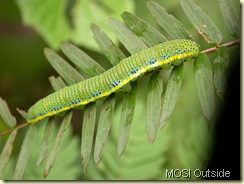
DSCN9323 DSCN9314 Cloudless Sulphur larvae

Field ID: Partridge peas are in bloom throughout the summer months and are easily recognized by their bright yellow flowers and small pinnate foliage.

Information: Previously known as Cassia fasciculata, Chamaecrista fasciculata is a nitrogen fixing legume. It is commonly planted for soil stabilization and improvement projects. The small nectar gland at the base of each leaf attracts ant species which may in turn protect the plant from herbivores and plant damaging insects. Partridge pea has a long history in Native American culture as a medicinal plant but; partridge pea can be a purgative in humans and is toxic to livestock. So once again, let’s leave this one for the birds, bees, and butterflies.

References and Additional Resources:

  • Austin, Daniel F. Florida Ethnobotany. Boca Raton: CRC Press. 2004
  • Miller, James H., and Karl V. Miller. Forest Plants of the Southeast and Their Wildlife Uses. Athens and London: University of Georgia Press. 2005
  • Taylor, Walter K. The Guide to Florida Wildflowers. Dallas: Taylor Publishing Company. 1992
  • NPIN Native Plant Database Chamaecrista fasciculata
  • Illinois Wild Flowers Chamaecrista fasciculata
  • USDA Plants Profile Chamaecrista fasciculata