
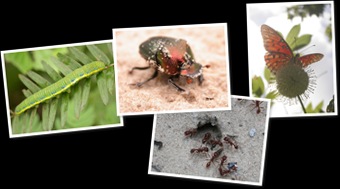
Nectaring butterflies have been the hot commodity at the Buttonbush Pond during the spring/summer bloom. The egg laying action is about to pick up in the sandhill where the partridge pea (Chamaecrista fasciculata) will prove irresistible to a variety of sulphur butterflies. The sandhill is where you will also find our very own example of Sisyphus in the rainbow scarab (Phanaeus vindex) diligently rolling up and and storing whatever piles of poo it comes across. Florida harvester ants (Pogonomyrmex badius), forever on the march, find their home in the sandhill as well.

The cicadas are most definitely turning up the volume through out the woods…look for their molts at the top of shrubs and dead branches. Keep your focus ahead on the trails lest you walk right into the web of a tiny spiny orb weaver (Gasteracantha cancriformis) or a not so tiny golden silk spider (Nephila clavipes). One of my favorites, the green lynx spider (Peucetia viridans), looks like green glass. They don't spin a web but rather stalk the foliage for their unsuspecting prey.

Deep in the leaf litter you will likely come across all sorts of things including the real Florida palmetto bug…the Florida woods cockroach (Eurycotis floridana). These nearly wingless roaches are not considered household pests preferring the rich bounty of the outdoors to your pantry. Disturb them and they emit a very noticeable odor something like almonds or sweet amaretto.
Once you have had your buggy fill of the Back Woods don’t forget to stop off in the Bioworks Butterfly Garden for an up close look at the metamorphosis of Florida native butterflies.
Of course, the woods would not be the woods without our very own population of mosquitoes. So, use good sense as you would in any outdoor area this time of year, cover up and wear your insect repellant.

Check out the Animal Species tab at the top of the page for a listing of more of the insects found in the Back Woods


