Showing posts with label sandhill. Show all posts

Tuesday, May 11, 2010

Prickly Pear

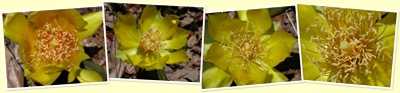
DSCN1472 Often prostrate and fairly unremarkable in the landscape (unless you sit on one), the prickly pear cactus (Opuntia humifusa) can be a real show stopper when in bloom. Dazzling yellow blossoms, open only during the day, festoon these bristly herbs in the warm spring and summer months.

DSCN1448 The pads of the prickly pear are actually the stems of the plant. The leaves have been reduced to spines. Spines come in two forms; notable stiff spines about an inch in length and the less noticeable  fine tufts of short spines (glochids) that can stick and stay anywhere you come in contact with them (ouch).

cochineal Often in the fall you will come across a prickly pear in the Back Woods that appears to be covered in a white cottony material. The white cottony (actually waxy) mass is providing cover for the cochineal scale insect. An extract (the red goo on my finger) from this  insect has been used as textile dye for centuries and is even used as a food grade colorant today (look closely at the label on your red grapefruit juice.) There are some nice details from this UCLA site about the cochineal scale and its uses.

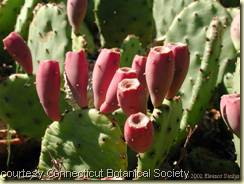
Prickly pear fruit (tunas) as well as the pads (nopales) are edible to humans and wildlife. The pads, fruit and seeds are an important food resource for our gopher tortoise population as well as for our songbirds, woodpeckers, and small mammals. Be sure to peel the fruit carefully before grazing in the field…the fruit are also dotted with those fine tufts  of spines!

There are  six species of native prickly pear cactus in Florida, two of which are endangered and one is threatened (our Opuntia humifusa has a stable population for now.) Habitat destruction is the primary cause of decline for many of these species but, all prickly pear have been further threatened by introduced insect species. Several non native moths ,most notably the  cactoblastis moth (Cactoblastis cactorum), were introduced to the state and their caterpillars have adversely affected our native, endemic, threatened, and endangered prickly pear cactus species. Current efforts to control the cactoblastis moth include removing infected plants and the release of sterile moths to reduce and contain the infestation in the southeast. It is hoped these measures will prevent the spread of the moth westward in the U.S. and to Mexico where Opuntia species are important agricultural crops not only for livestock but for humans as well.

Look for this interesting plant in the high, dry, open and sandy areas of the Back Woods primarily in the eastern and western sandhills.

DSCN1472

Friday, April 30, 2010

Florida Greeneyes

DSCN1410 Look closely among the wonderful sprays of wildflowers popping up this spring for another one of our favorites, Florida greeneyes (Berlandiera subacaulis.) Native and endemic to Florida, Florida greeneyes are found in sandhill environments preferring deep sandy soils and plenty of sun.

DSCN1411 In the aster family, Asteraceae, Florida greeneyes sports a pretty cool variation on the classic composite flower type. The flowers are surrounded by an attractive set of overlapping bracts that  form a cup or plate like structure behind the flowers. The ray flowers are in a sparse ring around the disk flowers. The disk flower buds form the “green eye” in the center but eventually open to a bright cheery yellow just like the ray florets. Butterflies, bees, and other connoisseurs of nectar and pollen find the flowers of Florida greeneyes irresistible.

DSCN1413 After the pollinators have finished their job, the bracts (involucre) almost form a plate on which the  winged seeds are presented to the wind. Fortunately, Florida greeneyes spreads and propagates readily from seed so we only hope to see more of them as we continue our rehabilitation efforts in the sandhill!

Monday, March 29, 2010

The Sky is Blue and So Are You

DSCN1142

Several fluffy silver lumps of beautiful skyblue lupine (Lupinus diffusus) dot the sands of the the Western sandhill and most all are covered in bloom right now.  Skyblue lupine are found commonly throughout the state of Florida in sandhills and dry open hammocks. Popular with bees, the flowers have a pale blue corolla with a creamy white central spot. Even when not in bloom, they are easily recognizeable by their silky silvery haired foliage. Lupine are a member of the Fabaceae family (formerly Leguminosae) known commonly to many as the bean family or legumes. Lupine are in a sub order of legumes described as papilionaceous or having flowers that resemble a butterfly.

Friday, December 11, 2009

Back Woods Happenings and Such

I am remiss in yet lauding the activities of our two new repeat volunteers. College students Shayna and Catlin joined us in October. Since that time, they have made a serious impact on invasive species with their weekly volunteer activities. The gals took the lead in clearing air potato by hand out of the bottoms west of the Buttonbush Pond. From there, they have been tackling the Caesar weed (Urena lobata) that sprang up en masse in the plow line cut to control the brush fire last spring. I can not thank these women enough for their dedicated efforts in the Back Woods.

We welcome back our volunteer George. Down for the winter, George brings his trail maintenance experience from working on access trails to the AT at his summer home. He is currently helping me break down all the cherries we are thinning out of the forest. George also volunteers for us on a weekly basis, we are very happy to have him back.

DSCN0716 Bones from above…last week while pulling air potato vines from the tree canopy, one of the volunteers was rewarded with bone dropped on her head. The bone looks like a large bird tibia. First thought was maybe it was from a bird that died in the tree top and the carcass never made it to the ground because of all the vines. A closer look at the bone shows it to be thoroughly gnawed on all over (nom, nom, nom as our Butterfly Guru would say.) It is possible a squirrel brought the bone up into the canopy to gnaw on for tooth maintenance or calcium.

DSCN0753 The western sandhill is home to at least 1 large adult and a couple juvenile gopher tortoises. The big guy ( I call him Fred) has nice burrow with a huge apron of sand right near the trail. This location is great for the education staff to show students the characteristics of a burrow fairly up close. This location also puts the tortoise at a little greater risk from visitors who are not familiar with the sensitive nature of the burrows or the threatened status of the tortoises. Recently, it appears a regular visitor likes to inspect the burrow up close and with a canine companion. We have now posted a sign asking visitors to maintain their distance. In the near future, we will have kiosks with rules for the Back Woods posted. One of those will be pets must be leashed and picked up after. Until that time, I guess we’ll have to rely on our resident pooper scoopers like this rainbow scarab (along with at least one other variety of dung beetle) made quick work of a pile o’ dog doo left in the sandhill.

DSCN0729 Awww! I am a serious sucker for ‘possums. Fortunately for me, they frequently find themselves trapped in the bottom of a trash can on the MOSI grounds. The staff must have me on speed dial for this situation because, I always get the call to help resolve the problem. My solution: Trek the can, possum in tow, to a spot off trail in the Back Woods. Most of the time the possum is in such a defensive stupor they won’t even make a run for it when I lay the can over. This little lady however skipped right out of the can the moment I laid it down and quite calmly sauntered off into the brush. Take a close look at the pickin’s in that trash can. What respectable Opossum could pass that up? Find one in your can at home? Just lay the can over and leave it be for awhile and the possum will find its way out on its own. Secure your can lids to prevent the problem in the future. :-)

Possibly to become a weekly tradition is a post featuring the the endless supply of air potatoes and more unusual or interesting trash collected during our work in the Back Woods. I humbly bring you this week’s Taters and Trash.

DSCN0795 DSCN0797Out of a pile of air potatoes picked up up while clearing Caesar weed, this one was definitely worth highlighting. With a little imagination it definitely looks cartoonish even reminiscent of a Bill Plympton caricature. The trash seems to be everywhere you look some days. A closer inspection finds all kinds of household garbage and construction debris as well as automotive junk. The plastic horse head, slightly surreal without its stick, is our find of the week. DSCN0799

Tuesday, October 13, 2009

Narrowleaf Silkgrass

DSCN0024

Family: Asteraceae

Genus: Pityopsis

Species: graminifolia (Michx.) Nutt.

Synonym: Heterotheca graminifolia

Common: narrowleaf silkgrass, grassleaf golden aster

Lovely narrowleaf silkgrass (Pityopsis graminifolia) are adorned in dazzling yellow flowers this time of year for their part of the sandhill fall show. Those lovely yellow flowers about the size of a dime are visible from mid to late summer through late fall. Through out the rest of the year it often appears similar to a clump of grass but, the narrowleaf silkgrass is easily recognized by the silvery sometimes densely haired foliage for which it is named. Growing between one and three feet tall, this native Florida sandhill perennial prefers sunny open dry sites. They are often found in colonies spreading out by rhizomes and also propagate by seed. Some text note the narrowleaf silkgrass as an important food for gopher tortoise.

DSCN0025

Friday, October 9, 2009

Coastalplain Palafox

DSCN5414

The sandhill is putting on its annual fall show. Puffs of pale pink coastalplain palafox (Palafoxia integrifolia) dot the white sands in between lavender spires of blazing star (Liatris sp.). The palafox has a sweet fragrance and beetles of all kinds just seem to love it. Somewhat non descript much of the year, this pastel beauty is common in dry pinelands throughout Florida and most obvious during the fall bloom.

DSCN0005 DSCN0006

Tuesday, September 1, 2009

Plant Profile: Partridge pea

Common Name: partridge pea, sleeping plant

Scientific Name: Chamaecrista fasciculata (Michx.) Greene

Form:  Annual legume (bean)

Height/Spread: 1-3 ft tall, spread similar to height.

Leaves: Alternate, evenly pinnately compound olive green leaves with small (up to 2cm) spine tipped leaflets. Leaflets fold along the rachis when touched or in response to nightfall. Two permanent stipules and a small disc shaped extra floral nectary gland are at the base of each petiole.

DSCN9008 DSCN9005

Stems: Smooth and green becoming reddish brown more haired with maturity.

DSCN9004
Flowers: Bright yellow 5 petaled flowers with red markings at the base of the petal. Stamens are sometimes red in color. One petal often folds in over stamen and anther. Flowers arise from leaf axil with the stem.

DSCN9003DSCN9002 

Fruit and Seeds: Flat 2-3 inch long legume (bean pod) producing dark brown flattened seeds.

DSCN9270

Habitat: Partridge pea is characteristic of dry upland plant communities. Can be found along the edges of disturbed sites.

DSCN9246_stitch

Range: Throughout the Eastern and Central United States.

Shade Tolerance: Somewhat tolerant.

Fire Tolerance: Habitat and establishment may be improved through fire.

Wildlife Use: Partridge pea is important as the larval host plant of several sulphur butterflies (Giant Cloudless, Little yellow, and Orange Sulphurs). (Check out Kristen’s Butterfly blog Lepcurious for a post on other host plants for sulphur butterflies) Seeds of partridge pea are important part of the diet of quail particularly in the Midwest. The plant as a whole is preferred white tailed deer browse.

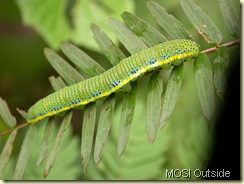
DSCN9323 DSCN9314 Cloudless Sulphur larvae

Field ID: Partridge peas are in bloom throughout the summer months and are easily recognized by their bright yellow flowers and small pinnate foliage.

Information: Previously known as Cassia fasciculata, Chamaecrista fasciculata is a nitrogen fixing legume. It is commonly planted for soil stabilization and improvement projects. The small nectar gland at the base of each leaf attracts ant species which may in turn protect the plant from herbivores and plant damaging insects. Partridge pea has a long history in Native American culture as a medicinal plant but; partridge pea can be a purgative in humans and is toxic to livestock. So once again, let’s leave this one for the birds, bees, and butterflies.

References and Additional Resources:

  • Austin, Daniel F. Florida Ethnobotany. Boca Raton: CRC Press. 2004
  • Miller, James H., and Karl V. Miller. Forest Plants of the Southeast and Their Wildlife Uses. Athens and London: University of Georgia Press. 2005
  • Taylor, Walter K. The Guide to Florida Wildflowers. Dallas: Taylor Publishing Company. 1992
  • NPIN Native Plant Database Chamaecrista fasciculata
  • Illinois Wild Flowers Chamaecrista fasciculata
  • USDA Plants Profile Chamaecrista fasciculata

Thursday, April 16, 2009

More Gopher Goodness

Couple more shots from my guests from the EPC.

DSCF1510 DSCF1511

Looks like hatchling size to me but, seems a little out place in that much of the literature indicates breeding season starting around April with up to a 100 day gestation. So, we’ll assume he is probably last years brood going on 6-9 months old. Our resident ecologist Celina has them on her radar now. Won’t be long and I am sure she’ll be giving us a full rundown as soon she comes across one!

MOSI’s Newest Team Member

While touring with some guests from the EPC through the Back Woods this morning, we came upon (and nearly stepped on) on this super coo inducing little cutie. There might not be anything cuter in a sandhill than an itty bitty orange gopher tortoise baby. And, along with the news that a staff member relocated another the same size from the parking lots earlier in the week; I would say we have good evidence there is a reproducing population of gopher tortoise using the sandhills in the Back Woods! Yay!

IMAGE_267

And to put that size in a little better perspective…

IMAGE_268

Tuesday, March 17, 2009

MOSI Wildfire Video


Tampa Fire Rescue copy: On 3/14/09 about 1340 hrs TFR units responded to a brush fire in the wooded area behind the Museum of Science and Industry, 4801 E Fowler Avenue. On scene fire crews reported smoke coming from the woods about 100 feet into the tree line, they estimated about 2 acres to be burning. It took about 90 minutes to bring the fire under control, no injuries were reported.

An Investigator from the Tampa Fire Marshals Office is on scene looking into the fire cause.

Fire crews worked quickly to make sure the flames did not interrupt the Renaissance Festival occurring at the edge of the woods. Some smoke went into the festival area, there was no interruption to the festival or MOSI.

After fire crews used brush trucks to access the burning area and knock down the fire a tractor from the Division of Forestry arrived on scene to cut a fire break around the burnt area. Nearly 3 acres burnt.

About 8 firefighting units from Tampa, Temple Terrace, the Division of Forestry and Hillsborough County were on scene.

Tuesday, March 10, 2009

Sandhill Expansion

Saturday was an absolutely wonderful day spent with old friends and new. Members of the Caribbean Chapter (all of central to southern Florida and Puerto Rico) of the Society of American Foresters held their annual volunteer service day in the Back Woods @ MOSI. New volunteer Forest Stewards, George and Brian, joined us to learn some chainsaw skills and help in the cleanup.

IMG_6124Priority of the day was to tackle the hardwoods (mostly sand live oak [Quercus geminata] and some black cherry [Prunus serotina] that are encroaching on the sandhill plant community. Commonly the canopy of trees in a sandhill community in our area might be dominated with longleaf pine (Pinus palustris) with a mix of a little turkey oak (Quercus laevis) , bluejack oak (Quercus incana), sand live oak, and others depending on the amount of disturbance (fire) the system is exposed to. Typically these systems are very open and subject to frequent low intensity fires that keep all but the fire resistant longleaf pine from dominating the canopy.

IMG_6116 Needless to say their were some hardwoods shaking in their roots on Saturday. To the task; professional foresters (Sam), land managers (Stu), forestry consultants (Eric), and forestry students (Walter) broke out their chainsaws and starting clearing. Many thanks to SAF member Sam for sharing chainsaw skills with our volunteer Brian (we might even make him a forester). Some serious progress was made in the western sandhill. Unwanted hardwoods were cleared in the center and around the perimeter. This section is one of the few open areas in the forest still able to support  herbaceous sandhill species and gopher tortoise.

IMG_6117 In addition to clearing trees, we cleared a serious amount of garbage from the sandhill. Volunteer George meticulously collected bags and bags of broken glass, mattress coils, and miscellaneous construction debris buried in the sandhill and more  revealed by the clearing activities. There is still a disturbing amount of buried material throughout the forest but with our volunteers concerted efforts, the task is most definitely surmountable!

IMG_6134 SAF members Mindy and Erin took on the task of recording GPS coordinates and conditions of the over 100 trees planted in January for MOSI’s Florida Arbor Day Celebration. Fortunately both Mindy and Erin participated in the January plantings and were familiar with the scattered locations of all the trees. Following the field collection, Mindy is collating all the data and producing GIS documents to analyze the data spatially(Thanks Mindy!). With this data, we hope to track the success of the planting and the future growth of the trees.

IMG_6143 We closed out the day hot and dusty. I thanked my friends for all their help and wished them well on their way home (some traveled over a hundred miles to join us for the day). I captured one last photo in the woods as everyone left. A honey bee on poison ivy (Toxicodendron radicans) blossoms signaling to me Spring is on the way and all is well with the woods.

Tuesday, March 3, 2009

Skyblue Beauty


A solitary skyblue lupine (Lupinus diffusus) is gracing us with bloom in the western sandhill. Skyblue lupine are found commonly throughout the state of Florida in sandhills and dry open hammocks. Popular with bees, the flowers have a pale blue corolla with a creamy white central spot. Even when not in bloom, they are easily recognizeable by their silky silvery haired foliage. Lupine are a member of the Fabaceae family (formerly Leguminosae) known commonly to many as the bean family or legumes. With a nod to Kristen over at the Lepcurious blog, lupine are in a sub order of legumes described as papilionaceous or having flowers that resemble a butterfly. Check out the MOSI Outside Flickr group for more pictures of the lupine and other great shots from the Back Woods, BioWorks butterfly garden, and the Richard T Bowers Historic Tree Grove

Wednesday, October 15, 2008

Sandhill in Bloom

Now is a great time to check out the sandhill communities in the Back Woods at MOSI. Many beautiful sandhill and scrub wildflowers put on their show in the fall.


Blooming now are fragrant coastal plain palafox (Palafoxia integrifolia)
snowy clumps of sandhill wireweed (Polygonella robusta),

vivid spikes of blazing star (Liatris tenuifolia),

and the glowing rays of goldenaster (Chrysopsis scabrella),


Please remember to enjoy the flowers by admiring from a distance or keep the memory through photography but, please do not pick flowers or remove plants from the preserve. Wildflower watch critters are on duty!

Wednesday, September 3, 2008

Sandhill Surprise

Florida sandhill and scrub systems are two of my favorite plant communities. There are so many neat things to be found. And, today I found something new to me! Too Cool!!!

While searching for wiregrass and checking on the progress of the liatris (shortleaf gayfeather: Liatris tenuifolia), I almost stepped right past this little beauty. This gem is the native terrestrial orchid Pteroglossaspis ecristata, common name giant orchid or false coco or wild coco. Native to the Southeast, it is threatened in Florida and endangered in North Carolina. Upland habitat loss and fire suppression are likely the key reasons for this plants decline.


Now with a mouthful of a name like Pteroglossaspis ecristata, I just had to find out what the derivation was! Pteron (wing), glossa (lip), aspis (shield) then ecristata for without crest. Interestingly enough, this plant used to be genus Eulophia which means well crested. That means the original naming was well crested without crest. (I am such a plant nerd!)

The foliage has an almost pleated appearance and could be easily mistaken for palmetto or sabal seedling if you were not paying attention.


And I actually did find a clump of wiregrass. Hard to believe but, I think it is the only one.


Tuesday, September 2, 2008

Sandhill Show N Tell

Today, I was treated to a multitude of six-lined racerunners (Cnemidophorus sexlineatus sexlineatus) scurrying about in the sandhill. Every step I took sent zippy little teeids scurrying in every direction (they are supposedly capable of running up to 18mph). Amazingly, one allowed me to get close enough to snap a couple of photos.

One of our western sandhill residents... gopher tortoise (Gopherus polyphemus)...I call him Fred.


A little ceraunus blue (Hemiargus ceraunus) butterfly atop narrowleaf silkgrass (Pityopsis graminifolia).

Florida harvester ants (Pogonomyrmex badius)... I love how they usually adorn the perimeter of the mound with charcoal.